
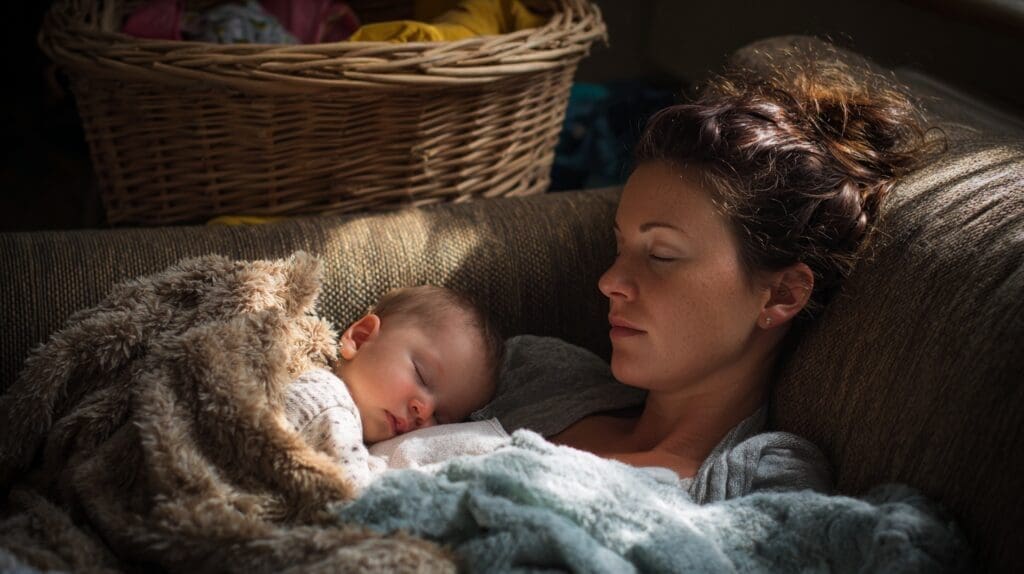
As a postnatal doula with years of experience supporting families across Surrey and within NHS maternity services, I’ve heard it all. “I should be doing more.” “I feel guilty just lying down.” “Other mums seem to be coping fine.” These aren’t one-offs. They’re phrases I hear weekly – often daily – from new mothers trying to navigate recovery, parenting, and the unrealistic expectations placed on them by society, social media, and sometimes even themselves.
This post is for every mum who has been made to feel that rest is indulgent. That slowing down is a weakness. That needing help somehow means you’re failing. Let me be clear – it doesn’t. Rest is not lazy. In fact, it’s one of the most vital and powerful things you can offer yourself after giving birth.
Let’s talk about what real recovery looks like in those crucial weeks after birth, why rest is essential, and how to reframe it as a core part of healing rather than a luxury you have to earn.
Why Modern Mothers Struggle to Rest
There’s no denying it – we live in a culture obsessed with productivity. The pressure to “bounce back” after birth is relentless. Within days of delivering, some mums are already worrying about getting back into jeans, hosting visitors, or posting smiling selfies on Instagram while feeding at 2am.
It’s no wonder so many women feel guilty about resting. The world keeps moving. Life doesn’t stop. And yet your body and mind need you to stop.
What’s more, the UK’s postnatal system can feel patchy at best. While midwives and health visitors do wonderful work, the reality is many women only get a handful of brief check-ins after leaving hospital. According to the NCT, 60% of new mums feel they don’t get enough postnatal support. Add sleep deprivation, hormone changes, and physical healing to the mix, and it’s no surprise rest ends up low on the list.
But just because the system isn’t fully set up to support rest doesn’t mean you shouldn’t prioritise it. That’s exactly where postnatal doulas and personalised support come in.
What Does Rest Actually Mean?
Rest doesn’t have to mean doing nothing for days on end – although if you’re recovering from a difficult birth, a caesarean, or just adjusting to life with a newborn, that might be exactly what you need.
Rest also includes:
- Sleeping during the day when you can, even for 15 minutes
- Sitting with your feet up while someone else takes baby for a walk
- Eating nourishing meals without rushing
- Letting the laundry pile up and the hoover sit idle
- Having a trusted professional care for your baby while you close your eyes, take a bath, or just exhale
Rest is about allowing your body and mind the time they need to repair, recover and adjust. And there’s solid science behind it.
The Science of Rest and Recovery
Giving birth is an enormous physiological event. Your body has expanded, shifted, and stretched over nine months, and then gone through one of the most intense physical exertions possible. Whether your delivery was vaginal or by caesarean, your uterus alone needs around six weeks to return to pre-pregnancy size. Your pelvic floor and abdominal muscles require healing. Your hormones are recalibrating. Your brain is adjusting to motherhood – something neuroscientists now call “matrescence”.
Lack of rest has been linked to longer recovery times, increased risk of postpartum depression, and weakened immune response. A study published in the Journal of Obstetric, Gynecologic & Neonatal Nursing found that insufficient rest in the first month post-birth correlated with poorer mental health outcomes at six months.
Your body isn’t asking for rest out of laziness. It’s asking because that’s how it heals.
Why We Need to Ditch the “Supermum” Myth
Too many mums are still trying to do it all – host guests, cook meals, breastfeed around the clock, and keep the house clean, all while recovering from a major life event.
Here’s the truth: You are not supposed to do this alone. Historically, women gave birth into communities of support. There were aunties, grandmothers, neighbours, other mums – all lending a hand. Today, many women find themselves isolated, especially in the early days. The result? Burnout. Resentment. Silent suffering.
Let’s be clear: being a good mum has nothing to do with how quickly you’re back on your feet. You are not lazy for resting. You are wise. You are strong. You are honouring your recovery, your baby, and your future self.
What Rest Looks Like With the Right Support
One of the biggest shifts I see when working with new mums is how quickly their relationship with rest changes when someone is there to validate it.
With professional postnatal support, rest becomes possible. Not just physically, but emotionally. A doula doesn’t just hold the baby – she holds the space. She reassures you that it’s okay to stop. That it’s safe to let go.
Here’s what some of my Surrey clients say rest looks like for them:
- “Having someone who made me a proper meal and told me to eat it slowly.”
- “Not having to rush out of bed to tidy up before my mum-in-law arrived.”
- “Knowing my baby was in trusted hands while I had a nap in peace.”
- “Someone reminding me that recovery takes time, and I was doing a great job.”
That’s not laziness. That’s empowered recovery.
Creating a Culture of Rest in Your Home
If you’re a partner reading this, or a friend or family member hoping to support a new mum, here are some ways you can help build a restful environment:
- Let her sleep. Even one undisturbed nap can lift a day.
- Encourage visitors to keep their visits short and helpful – or delay them altogether.
- Take on chores, without waiting to be asked.
- Remind her that rest is productive – it builds strength and helps her parent better in the long run.
And if you’re a mum yourself, the most powerful thing you can do is give yourself permission. Permission to stop. Permission to feel tired. Permission to not have it all together.
This is your time to heal.
Support Services That Prioritise Your Recovery
At Postnatal Helping Hands, my mission is to bring rest back into the centre of the postnatal experience. Whether it’s through gentle, nourishing care in your home, emotional support, or simply a pair of steady hands so you can take a break, I’m here to support your recovery fully – not just physically, but emotionally too.
Because you deserve it. Not when the house is clean. Not when the baby sleeps through. Now.
Final Thoughts
Rest isn’t lazy. It’s radical. It’s essential. It’s a quiet rebellion against a world that tells mothers they’re only worthy when they’re doing.
If you take just one thing from this, let it be this – there is nothing weak about stopping. In fact, some of the strongest mothers I’ve met are the ones who’ve said: “I need help. I need a moment. I need rest.”
You are not failing. You are recovering. And at Postnatal Helping Hands, you never have to do that alone.